Luc Vigneault
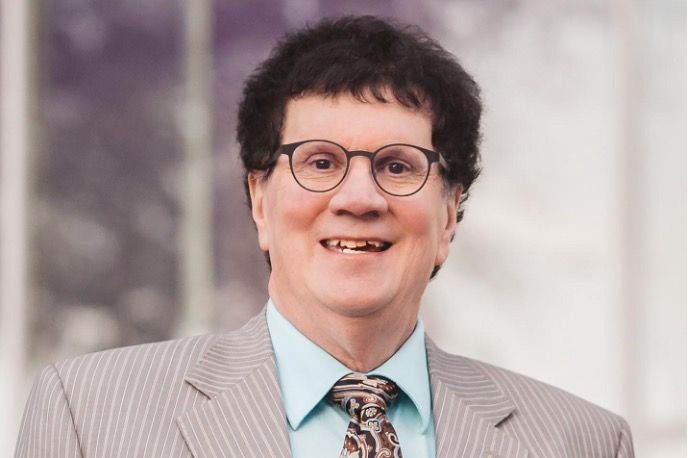
Mental Health Peer Support/Pair aidant en santé mentale
Patient Research and Teaching Partner/Patient partenaire de recherche et d’enseignement
Honorary doctorate in pharmacy from Laval University/Doctorat honoris causa en pharmacie de l'Université Laval
Expert in recovery and organization of mental health care/Expert en rétablissement et organisation des soins en santé mentale
International French-speaking author and speaker/Auteur et conférencier francophone international
Certified Personal Medicine Coach
Certified Personal Medicine Coach Trainer (CPMC-T)
Even today, the fear of being recognized as "crazy" remains very real. Luc Vigneault knows all about this. He himself has been treated for schizophrenia, substance abuse, depression, and non-hyperactivity attention deficit disorder. Perhaps you have already met him, in the middle of a discussion with an invisible interlocutor, victim of his disorder and the judgment of others. This "madman" may have been him.
Condemned to confinement and life in an institution, Luc could have resigned himself. Yet, supported by his family, friends and a few mental health workers who still believed in him, he remained hopeful. But self-stigmatization, insidious and destructive, kept him at the bottom of the abyss for a long time. One day, he stumbled upon a text by Patricia Deegan. It was a revelation: the impossible was becoming possible. A few years later, he went to Boston to meet the woman who had lit this flame of hope. His dream of becoming a game changer was no longer a utopia — it was becoming a mission.
Luc Vigneault became the first paid mental health peer support worker in Canada and Quebec. He co-founded the Quebec Peer Support Network Program as well as Vox Quebec, an association "by and for" people living with a mental health disorder. To deepen his practice, he recently completed the Certified Personal Medicine Coach (CPMC) training and also became a CPMC-Trainer, to help spread this recovery oriented approach in French.
A passionate self-taught man, Luc does not have a university degree, but his experiential knowledge has earned him the admiration and recognition of the academic community. He is now a Doctor honoris causa in pharmacy from Laval University and recipient of the King Charles III Coronation Medal, in recognition of his exceptional contribution to the advancement of knowledge on mental health and addiction recovery, as well as to the fight against stigma, in Québec and throughout the International Francophonie.
Luc Vigneault is now a lecturer at Laval University, a patient research partner at the Universities of Laval, Montreal, UQAM, Bordeaux and GHU Paris, as well as at the National Legal Psychiatry Institute Philippe-Pinel. He also made history by becoming the first patient in the world to sit as a member of a doctoral thesis jury, at the University of Bordeaux, an official recognition of experiential knowledge as equivalent to scientific knowledge.
Over the years, Luc has worked as a peer support worker in the community and in healthcare settings, then as a peer support consultant at the Mental Health and Addiction Program Department of the CIUSSS of the National Capital. He participated in numerous expert committees for the Quebec Ministry of Health and Social Services and has chaired several provincial mental health groups.
Author and lecturer, Luc has published several books for the general public, including:
- I am a person, not a disease! — bestseller that has left its mark on the general public,
- Heading for Recovery: Demanding Excellence in Mental Health Care,
- and, more recently, the Quebec-France-USA collective Prejudice, Discrimination and Exclusion in Mental Health: Ending Stigma (2022).
Today, Luc no longer hears voices... but he makes his own heard. Through the media, his writings and his lectures, he strives to change perceptions, restore hope and fight stigma. His voice now resonates with all those who, like him, refuse to let themselves be defined by a diagnosis.
Encore aujourd’hui, la peur d’être reconnu comme « fou » demeure bien réelle. Luc Vigneault en sait quelque chose. Il a lui-même été traité pour la schizophrénie, la toxicomanie, la dépression et un trouble du déficit de l’attention sans hyperactivité. Peut-être l’avez-vous déjà croisé, en pleine discussion avec un interlocuteur invisible, victime de son trouble et du jugement des autres. Ce « fou », c’était peut-être lui.
Condamné à l’enfermement et à la vie en institution, Luc aurait pu se résigner. Pourtant, soutenu par sa famille, ses amis et quelques intervenants qui croyaient encore en lui, il a gardé espoir. Mais l’autostigmatisation, insidieuse et destructrice, l’a longtemps retenu au fond du gouffre.
Un jour, il découvre par hasard un texte de Patricia Deegan. Ce fut une révélation : l’impossible devenait possible. Quelques années plus tard, il se rend à Boston pour rencontrer celle qui avait allumé cette flamme d’espoir. Son rêve de devenir un acteur de changement n’était plus une utopie — il devenait une mission.
Luc Vigneault devient alors le premier pair aidant en santé mentale rémunéré au Canada et au Québec. Il cofonde le Programme québécois Pair Aidant Réseau ainsi que Vox Québec, une association « par et pour » les personnes vivant avec un trouble de santé mentale. Pour approfondir sa pratique, il complète la formation Certified Personal Medicine Coach (CPMC) et devient formateur CPMC-T, contribuant à diffuser cette approche en français.
Autodidacte passionné, Luc n’a pas de diplôme universitaire, mais son savoir expérientiel lui a valu l’admiration et la reconnaissance du milieu académique. Il est aujourd’hui docteur honoris causa en pharmacie de l’Université Laval et récipiendaire de la médaille du couronnement du Roi Charles III, en reconnaissance de sa contribution exceptionnelle à l’avancement des connaissances sur le rétablissement en santé mentale et en toxicomanie, ainsi qu’à la lutte contre la stigmatisation, ici et dans toute la francophonie.
Luc Vigneault est maintenant chargé d’enseignement à l’Université Laval, patient partenaire de recherche auprès des universités Laval, Montréal, UQAM, Bordeaux et GHU Paris, ainsi qu’à l’Institut national de psychiatrie légale Philippe-Pinel.
Il a également marqué l’histoire en devenant le premier patient au monde à siéger comme membre d’un jury de thèse doctorale, à l’Université de Bordeaux, une reconnaissance officielle du savoir expérientiel comme équivalent du savoir scientifique.
Au fil des années, Luc a œuvré comme pair aidant dans la communauté et en milieu hospitalier, puis comme pair aidant consultant à la Direction des programmes de santé mentale et dépendances du CIUSSS de la Capitale-Nationale. Il a participé à de nombreux comités d’experts pour le ministère de la Santé et des Services sociaux du Québec et a présidé plusieurs regroupements provinciaux en santé mentale.
Auteur et conférencier, Luc a publié plusieurs ouvrages grand public, dont :
- Je suis une personne, pas une maladie! — best-seller qui a marqué le grand public,
- Cap sur le rétablissement : Exiger l’excellence dans les soins en santé mentale,
- et, plus récemment, le collectif Québec-France-USA Préjugés, discrimination et exclusion en santé mentale : Pour en finir avec la stigmatisation (2022).
Aujourd’hui, Luc n’entend plus de voix… mais il fait entendre la sienne. À travers les médias, ses écrits et ses conférences, il s’efforce de changer les perceptions, redonner espoir et combattre la stigmatisation. Sa voix résonne désormais pour toutes celles et ceux qui, comme lui, refusent de se laisser définir par un diagnostic.